
5 Things You Need to Know Before Lithia Farm Ranch Fencing
What Lithia Farmers and Ranchers Need to Know Before Installing a Fence
Lithia farm ranch fencing is one of the most important investments you’ll make for your property — and getting it wrong is expensive.
Whether you’re containing cattle, protecting horses, or securing a small hobby farm, the right fence makes all the difference. Here’s a quick overview of what matters most:
5 things to know before you start:
- Material choice — High-tensile wire, wood, vinyl, and livestock panels each suit different animals and budgets
- Installation costs — Expect $8–$15 per linear foot for perimeter fencing, plus $5–$12 per foot in labor
- Florida’s climate — Heat, humidity, and heavy rain demand rust-resistant and rot-resistant materials
- Electric fencing options — Hot wire and solar energizers add behavioral deterrence and predator control
- Local regulations — Hillsborough County zoning rules and UF/IFAS guidelines shape what you can build and where
Lithia sits in the heart of Hillsborough County, where small farms and working ranches are common. But Florida’s climate is hard on fences. Wood rots. Wire rusts. Vegetation overgrows.
A fence that works well in another state may fail fast here without the right materials and maintenance plan.
This guide walks you through everything you need to make a smart decision — before the first post goes in the ground.
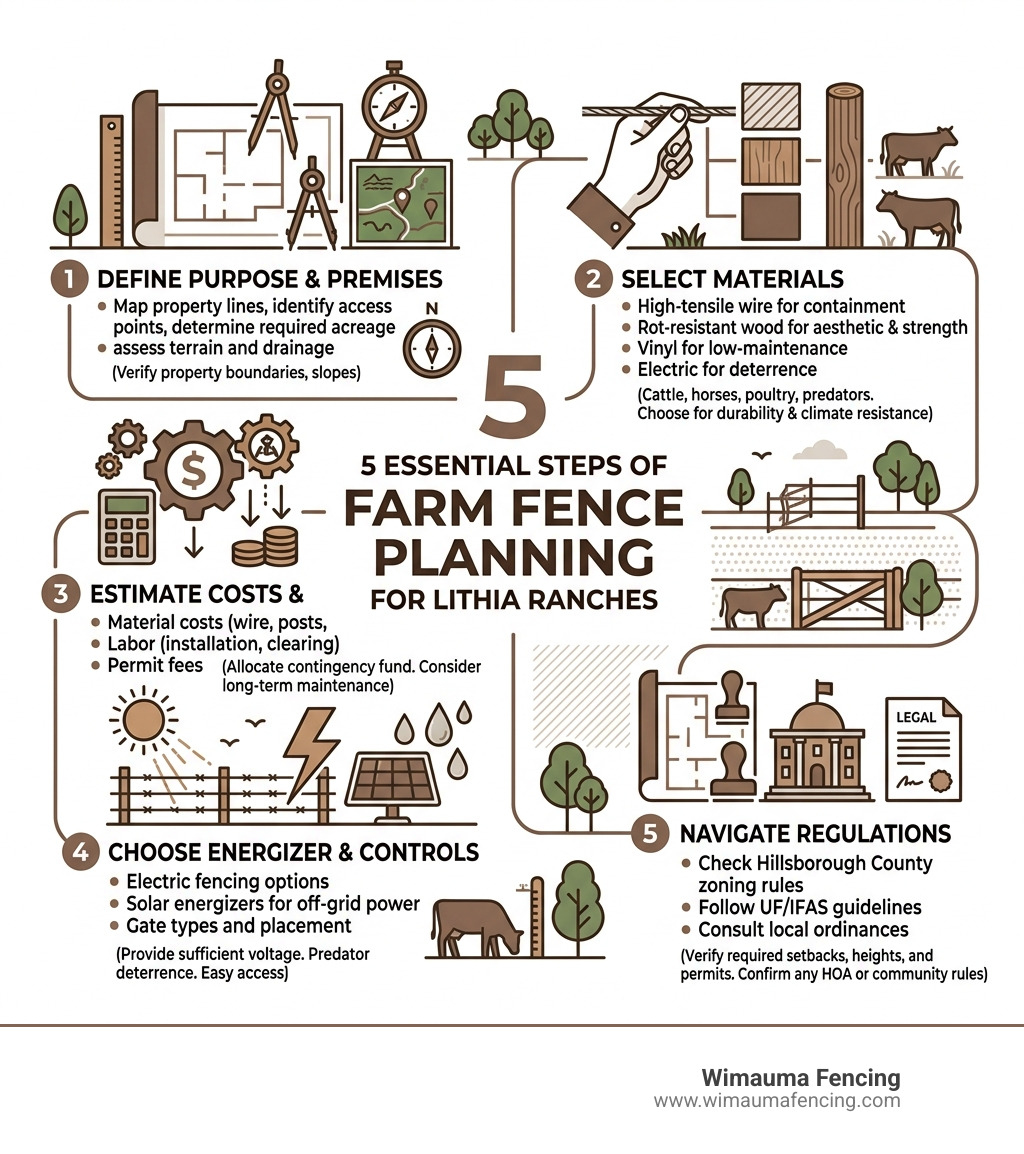
Lithia farm ranch fencing terms at a glance:
1. Choosing the Right Materials for Lithia Farm Ranch Fencing
Selecting the right material isn’t just about what looks good from the road; it’s about what keeps your animals in and the Florida wilderness out. In Lithia, we deal with unique soil conditions and high moisture, meaning your material choice dictates whether your fence lasts five years or thirty.
When we look at Farm Fencing Systems for Livestock, the consensus is clear: match the barrier to the animal’s behavior. For more info about farm fencing, it is helpful to understand that a cow views a fence as a suggestion, while a horse views it as a potential hazard.

Material Durability for Florida Ranches
- High-Tensile Wire: This is the gold standard for large Lithia acreages. It has a lifespan of 20–30 years with minimal maintenance. It’s weather-resistant and cost-effective for covering miles of perimeter.
- Pressure-Treated Wood: A classic choice for “horse country” aesthetics. However, in Florida’s humidity, ensure you use high-quality pressure-treated posts (at least 3 feet deep) to prevent rot.
- Vinyl Fencing: Increasingly popular in residential-adjacent farms in Lithia and Brandon. It doesn’t rot or require painting, making it a “set it and forget it” option for those who prioritize curb appeal.
- Livestock Panels: These are durable and incredibly easy to install. At approximately $1.70–$2.40 per foot, they are perfect for corrals, pens, and high-traffic areas where animals might “crowd” the fence.
- Pipe Fencing: Often used in professional equestrian facilities, pipe fencing offers maximum durability and a professional look that can withstand the weight of heavy livestock.
Species-Specific Fencing Heights
Different animals require different boundaries. If the fence is too low, they’ll jump or lean; if it has the wrong spacing, they might get stuck.
- Cattle: 54-inch height is standard. You need strong posts and high visibility to prevent them from pushing through.
- Horses: 60-inch height is recommended. Use smooth surfaces (like vinyl or wood planks) to prevent skin tears.
- Sheep and Goats: 48-inch woven wire is best. Be careful with “hot wire” placement, as thick fleece can sometimes insulate them from a mild shock.
- Pigs: 34-inch height is usually sufficient, but the fence must be “hog-tight” at the bottom to prevent rooting and escapes.
- Predator Deterrence: To keep coyotes or stray dogs out of poultry enclosures, fences should be fully enclosed or include a “buried” mesh portion to stop diggers.
2. Understanding Installation Costs and Budgeting in 2026
Budgeting for Lithia farm ranch fencing in April 2026 requires a look at both material markets and labor availability in Hillsborough County. While a 200-foot fence might cost between $1,600 and $3,000 for standard materials, larger agricultural projects benefit from scale but require more complex bracing.
| Fencing Type | Material Cost (per ft) | Labor Cost (per ft) | Total Est. (per ft) |
|---|---|---|---|
| High-Tensile Wire | $2 – $5 | $5 – $10 | $7 – $15 |
| Pressure-Treated Wood | $10 – $20 | $7 – $12 | $17 – $32 |
| Vinyl Fencing | $8 – $18 | $6 – $11 | $14 – $29 |
| Chain-Link | $8 – $15 | $5 – $10 | $13 – $25 |
Average Pricing for Lithia Properties
For a standard perimeter, expect to pay between $8 and $15 per linear foot. If you are looking at a larger project, you might wonder How Much Does It Cost To Fence 10 Acres For Cattle. Generally, wood fences sit at the higher end ($10–$20 per foot for materials), while wire options are more budget-friendly.
Don’t forget the “extras.” Gates and specialized corner posts can add $200 to $1,000+ to your total. Corner posts are the backbone of your fence; they should be at least 3 feet deep and set in concrete or well-packed drain rock to handle the tension of the wire.
Long-Term Value and Repair Costs
A cheap fence is often the most expensive one you’ll ever buy. Farm fence repairs in Lithia typically range from $200 to $1,000 per incident. Wood repairs average $3–$8 per foot, while wire or chain-link repairs stay lower at $2–$6 per foot.
By investing in high-tensile wire with a 20–30 year lifespan, you reduce your annual maintenance budget significantly. Additionally, a well-fenced ranch increases property value and improves farm efficiency by allowing for better pasture management and livestock safety.
3. Navigating the Florida Climate and Maintenance Requirements
In Lithia, our “seasons” are mostly defined by how much it rains. This moisture is the enemy of traditional fencing. According to the Small Farms Product and Service Directory – Hillsborough County, local producers must prioritize materials that can survive the subtropical environment.
Common Challenges for Lithia Farm Ranch Fencing
- Humidity and Rot: Wood posts are susceptible to ground rot. We recommend using pressure-treated lumber or metal posts for longevity.
- Vegetation Overgrowth: Florida’s growing season never really stops. Vines and weeds can short out electric fences and weigh down wire mesh.
- Heavy Rainfall: Soil erosion around post holes can cause fences to lean. Regular checks after summer thunderstorms are a must.
- Pest Damage: Termites and carpenter ants can weaken wood structures over time.
Maintenance Checklist:
- Monthly Inspections: Walk the line to check for sagging wires or vegetation touching your electric strands.
- Seasonal Tensioning: Wire expands in the summer heat and contracts in the rare winter chill. Adjust tensioners twice a year.
- Annual Stability Checks: Give your corner posts a “shake test” to ensure the ground hasn’t shifted or softened.
4. Enhancing Security with Electric and Smart Fencing Solutions
Modern ranching in Florida is getting smarter. Traditional barriers are now often supplemented with Electric Fence Solutions by Lydite® to provide a psychological barrier as well as a physical one.
Benefits for Small Farms and Ranches
Electric fencing isn’t just about keeping cows in; it’s about keeping predators like coyotes out.
- Behavioral Deterrence: Once an animal learns that the fence “bites,” they stop leaning on it, which extends the life of your physical fence.
- Rotational Grazing: Electric “poly-wire” or netting allows you to quickly move livestock between different pasture sections, improving soil health and forage quality.
- Solar Power: In the remote back-pastures of Lithia or Balm, running a power line isn’t always feasible. Solar energizers can power up to 40+ miles of fence without a plug-in.
- Intelligent Farm Solutions: New “smart” energizers allow you to monitor fence voltage from your phone. If a tree falls on the line in the middle of the night, you get an alert immediately.
5. Local Regulations and Professional Installation Standards
Before you dig, you need to know the rules. Hillsborough County has specific zoning requirements for agricultural fencing. While many farm fences are exempt from the strict permits required for residential privacy fences, there are still setbacks and height restrictions to consider, especially near property lines or public roads.
We highly recommend consulting UF/IFAS (University of Florida Institute of Food and Agricultural Sciences) resources. They provide excellent guidance on agricultural support and best practices for Florida producers.
Professional vs. DIY: The Risks
While DIY fencing is a tradition for many Lithia families, the risks of improper installation are high. A poorly tensioned wire can snap and cause injury, and a corner post that isn’t deep enough will eventually “heave,” ruining the entire line.
Frequently Asked Questions about Lithia Farm Ranch Fencing
What is the most cost-effective fencing for large Lithia acreages?
High-tensile wire is the most cost-effective choice. It covers the most ground for the lowest material cost and lasts decades longer than traditional barbed wire or untreated wood.
How often should I inspect my farm fence in the Florida climate?
At a minimum, you should do a visual inspection once a month. However, after major weather events like tropical storms or heavy summer downpours, a full walk of the perimeter is necessary to check for fallen branches or soil washouts.
Do I need a permit for agricultural fencing in Hillsborough County?
In many cases, bona fide agricultural operations are exempt from certain residential permit fees, but you must still adhere to “Right-to-Farm” laws and local zoning setbacks. Always check with the Hillsborough County Development Services or a professional installer like us before starting.
Conclusion
Investing in Lithia farm ranch fencing is about more than just boundaries; it’s about peace of mind. Whether you’re running a commercial cattle operation in Plant City or a small horse ranch in Lithia, your fence is your first line of defense against predators, escapes, and liability.
At Wimauma Fencing, we understand the unique challenges of the Florida landscape. From the sandy soil of South Hillsborough to the humid afternoons in Valrico, we build fences that last. We offer one-day installations for many projects, lifetime warranties, and competitor price matching to ensure you get the best value in 2026.
Ready to secure your property? Contact our fence company in Wimauma, FL today for a consultation tailored to your ranch’s specific needs. Let us help you protect what matters most with professional, durable agricultural fencing.